Laboratory and sales location - Charlotte USA
Based on the Methodology of VDA 19.1 (2015) and ISO 16232:2018
At CleanControlling North America, we help manufacturers identify, measure, and control particulate contamination before it impacts product performance, quality, or reliability. Our laboratory provides cleanliness inspections based on the methodologies described in VDA 19.1 (2015) and ISO 16232:2018, delivering accurate and repeatable results using established industry practices.
Whether validating new products, investigating contamination concerns, or meeting customer cleanliness specifications, our team provides reliable testing and detailed reporting to support your quality objectives.

Our Cleanliness Testing Process
Every project begins with a review of customer requirements, component drawings, and applicable cleanliness specifications to determine the appropriate testing methodology. Based on these requirements, qualified extraction procedures are selected to ensure the effective recovery and evaluation of particulate contamination.
Testing is performed using documented laboratory procedures and established cleanliness analysis methods to provide consistent and repeatable results.
Why CleanControlling North America?
- Analysis based on the methodologies described in VDA 19.1 (2015) and ISO 16232:2018
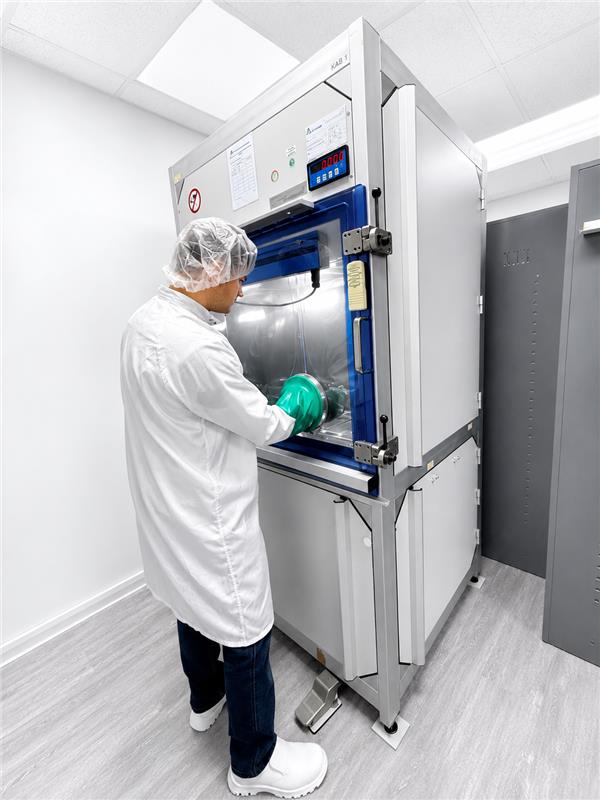
- Dedicated liquid extraction capabilities
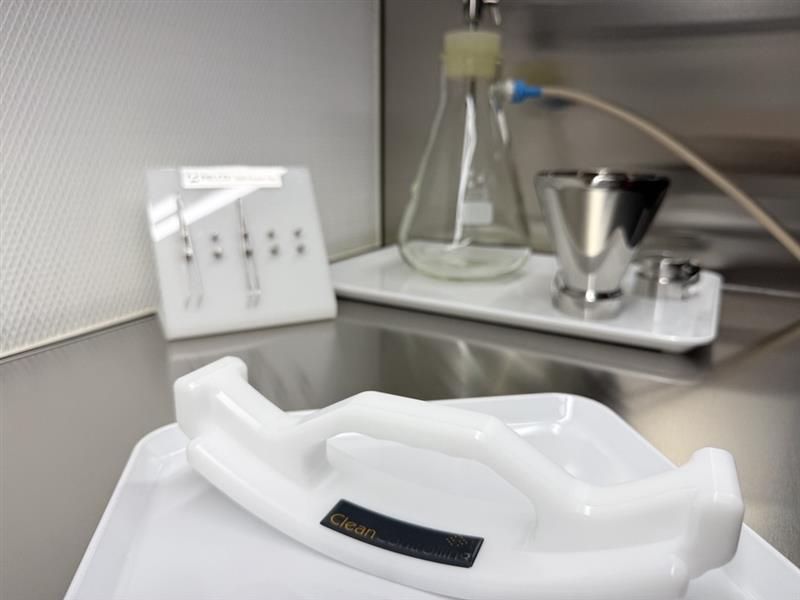
- Advanced C|PS vacuum suction extraction
- Controlled laminar downflow environment
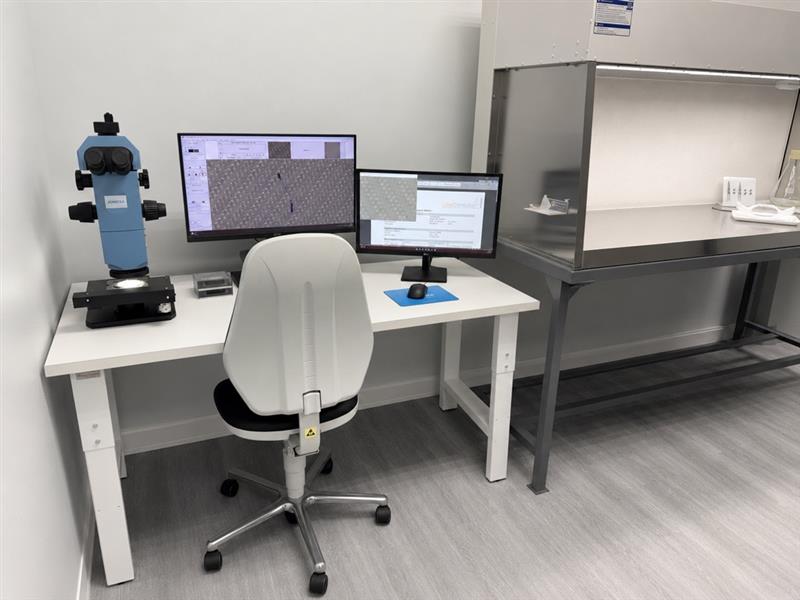
- Detailed particle classification and analysis
- Comprehensive reporting and technical expertise
- Local support from the CleanControlling North America laboratory
Extraction Capabilities
CleanControlling North America offers multiple extraction methods to support a wide range of components and cleanliness requirements.
Liquid Extraction
Liquid extraction is performed using a dedicated extraction cabinet designed to recover particulate contamination from component surfaces. This method provides efficient particle removal while maintaining controlled testing conditions and repeatable results.
C|PS Vacuum Suction Extraction
For applications where vacuum-based particle recovery is more suitable, CleanControlling utilizes the C|PS system. This extraction method allows particulate contamination to be collected directly from component surfaces through controlled suction.
The C|PS system operates within a laminar downflow environment, helping minimize secondary contamination and providing additional confidence in the test results.
Particle Analysis
Following extraction, recovered particles are captured on analysis filters and evaluated using light-optical analysis.
Particles are:
- Measured and sized
- Counted and classified
- Identified as metallic or non-metallic contaminants
- Documented according to customer requirements and applicable cleanliness specifications
Gravimetric analysis can also be performed to determine the total particle mass when required.
Reporting and Documentation
Comprehensive reports provide clear and detailed documentation of the cleanliness inspection process and test results. Customers receive actionable data that can be used to verify cleanliness specifications, support product validation activities, investigate contamination concerns, and improve manufacturing processes.
Newsletter Anmeldung